The best Christmas gift for a dog fits how that dog already spends its day: chewing, sniffing, chasing or napping. Start there, then pick a size and a budget. Below are ideas in three budget tiers, gifts "from the dog" for the people in its life, and a short safety checklist, because the holidays bring a few hazards that the rest of the year does not.
Start with how your dog plays
- The chewer gets the most out of a sturdy chew toy that is too big to swallow. Watch the first few sessions with any new chew to see how your dog handles it.
- The sniffer loves food puzzles and snuffle mats, which turn part of a meal into a search game.
- The chaser wants a new ball, a flying disc or a tug toy, plus someone to play with.
- The napper will use a new bed or a soft blanket every single day.
Most dogs are a mix, so one toy for play and one thing for rest covers almost everyone.
Stocking stuffers
- A new ball sized for your dog's mouth
- A squeaky or crinkle toy for a dog that likes to carry things around
- A small treat puzzle
- A new ID tag with your current phone number, a small gift that matters the day a dog slips out of the yard
Mid-size gifts
- A snuffle mat or an interactive puzzle feeder for a dog that eats too fast or gets bored indoors
- A durable tug toy for games you play together
- A washable fleece blanket for the couch or the crate
- A reflective collar or leash for dark winter walks
Bigger gifts
- A supportive bed, especially for an older dog that sleeps more
- A quiet-corner kit for a dog that gets overwhelmed when guests arrive. Cornell's Riney Canine Health Center suggests creating "a quiet area where your dog can retreat when overwhelmed by the noise or activity," which "might include a comfortable bed, toys and long-lasting treats."
Gifts from the dog, for the people who love it
Half the fun of a dog at Christmas is the gift tag that says it is from the dog. Ideas that last longer than the wrapping paper:
- A portrait of the dog for the wall. From a good photo, an artist or a portrait shop turns your dog into a painting-style picture.
- A photo calendar or a framed photo from the year's best pictures.
- A paw print on paper. If you use an ink pad, look for the ACMI "AP" seal, which the ASPCA notes means the product is non-toxic, and wipe the paw clean afterwards. Skip salt dough for this: see the safety checklist below.
- A donation in the dog's name to a local shelter or rescue.
Full disclosure: PawSums, the team behind this site, makes custom pet portraits on canvas. You upload a photo of your dog, we create a royal or watercolor-style portrait with AI-assisted digital art, email you a preview, and print it on a 12" x 16" or 18" x 24" canvas. Economy shipping in the US is free and takes about 9 to 16 business days, Standard is $4.99 and takes about 7 to 13 business days, and during the holiday season it can take a few days longer.
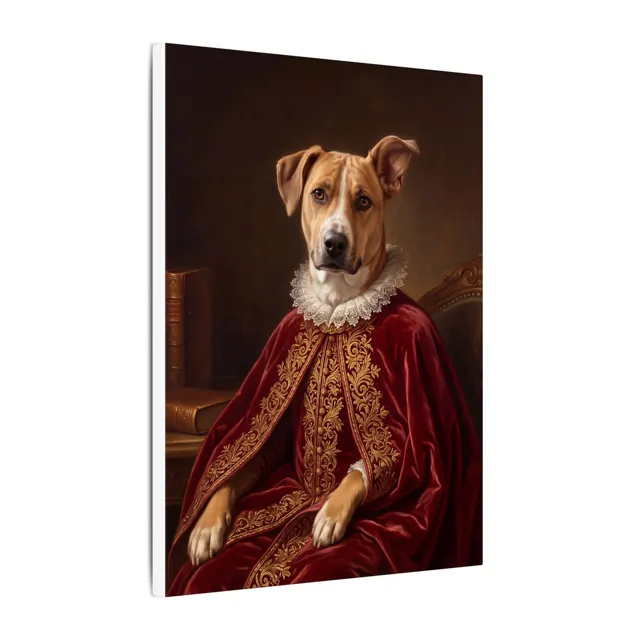 From the PawSums shop
Royal Pet Portrait Canvas
A classical royal portrait of your dog or cat, with details such as a velvet cape, a lace collar and a warm, dark painterly background.
See the royal style
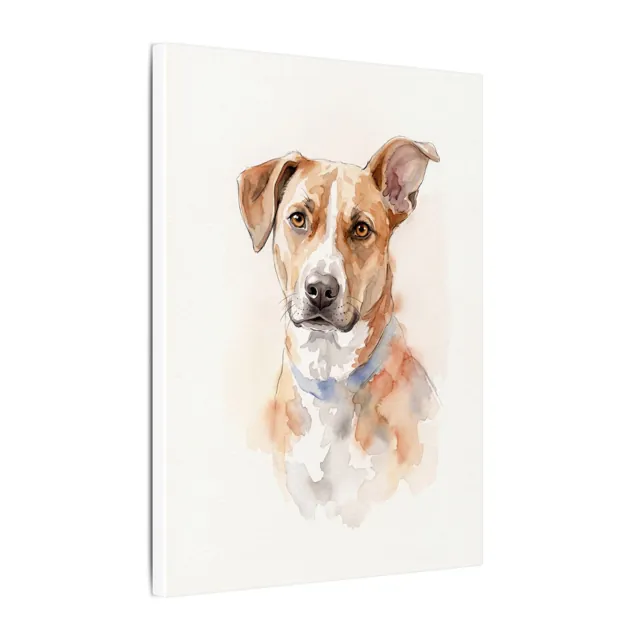 From the PawSums shop
Watercolor Pet Portrait Canvas
A soft, light watercolor-style portrait of your dog or cat, made as digital art, with gentle washes of color and fine ink details.
See the watercolor style
Holiday safety checklist
A few things show up in December that a dog does not meet the rest of the year. The short version, with the sources:
- Salt dough ornaments. The ASPCA Animal Poison Control Center warns that these ornaments "can be easily confused for a salty dog treat," and that the salt "can cause dogs to vomit, drink lots of water" and can lead to high sodium levels in the blood, which can cause seizures. Keep salt dough out of reach, including old projects, and call your veterinarian or the ASPCA Animal Poison Control Center at (888) 426-4435 if your dog eats some.
- Tinsel, ribbon and string. The FDA advises: "keep the tinsel off the tree and collect all ribbons and strings after opening your gifts." According to Cornell, tinsel "ingestion can lead to intestinal obstruction."
- Ornaments and cords. Cornell notes that broken ornaments "may cause mouth, throat, or intestinal injuries, or even choking," and that "chewed cords can cause electrical burns or even electrocution."
- Bones and fatty leftovers. Bones "can cause choking, tooth fractures, or even digestive tract obstructions," and high-fat foods "can trigger vomiting and diarrhea, or even pancreatitis" (Cornell). The FDA's advice is simple: once dinner is done, put leftovers and bones somewhere your dog can't get to them.
- Chocolate and xylitol. If your dog eats either, the FDA says to "consider it an emergency and call your veterinarian immediately." Dark chocolate is especially dangerous, and xylitol, a sweetener in many sugar-free products, "can cause dangerously low blood sugar, seizures, or liver damage" even in small amounts (Cornell). For a first estimate after a chocolate accident, use the chocolate toxicity calculator, and see holiday foods that are toxic to dogs.
- Holiday plants. Poinsettia "can irritate the mouth and stomach," holly is not highly toxic but can cause drooling, vomiting and diarrhea, and mistletoe in large amounts can cause vomiting, diarrhea and heart problems (Cornell). Keep them out of reach.
Wrapped gifts under the tree count too: keep food gifts, especially chocolate, up high until they are opened.
A puppy's first Christmas
For a puppy, everything in the house is new at once: the tree, the visitors, the paper and the food smells. Keep the first holiday simple. A couple of chew toys sized for the puppy, a quiet place to sleep away from the party and close supervision around the tree go further than a pile of gifts. The safety checklist above matters even more for a puppy, which tends to taste anything it finds.
Frequently asked questions
What should I get my dog for Christmas?
Match the gift to how your dog plays: a sturdy chew toy for a chewer, a food puzzle or snuffle mat for a sniffer, a ball or tug toy for a chaser, and a bed or blanket for a napper.
Are rawhide chews a good stocking stuffer?
Be careful. Cornell notes that some treats, like rawhide, "can pose choking risks or cause intestinal blockages if they are difficult to digest." Supervise any new chew and pick a size that matches your dog.
Can my dog have a Christmas cookie?
Not one made for people. Cookies can contain chocolate or xylitol, which are dangerous for dogs, and rich holiday food can upset a dog's stomach. If your dog eats chocolate or anything with xylitol, call your veterinarian right away.
What is a good Christmas gift from the dog?
Something that keeps the dog in the picture: a portrait of the dog, a photo calendar, a paw print on paper made with an ink pad that carries the ACMI "AP" seal, or a donation to a shelter in the dog's name.
Sources
- Cornell University College of Veterinary Medicine, Riney Canine Health Center: Holiday hazards for dogs (updated December 2024)
- U.S. Food and Drug Administration: Take the "Oh No!" Out of Your and Your Pets' Holiday "Ho-Ho-Ho!" (content current as of February 19, 2025)
- ASPCA: Crafting with Care: Pet Safety Tips for Holiday Arts and Crafts (December 6, 2016)